
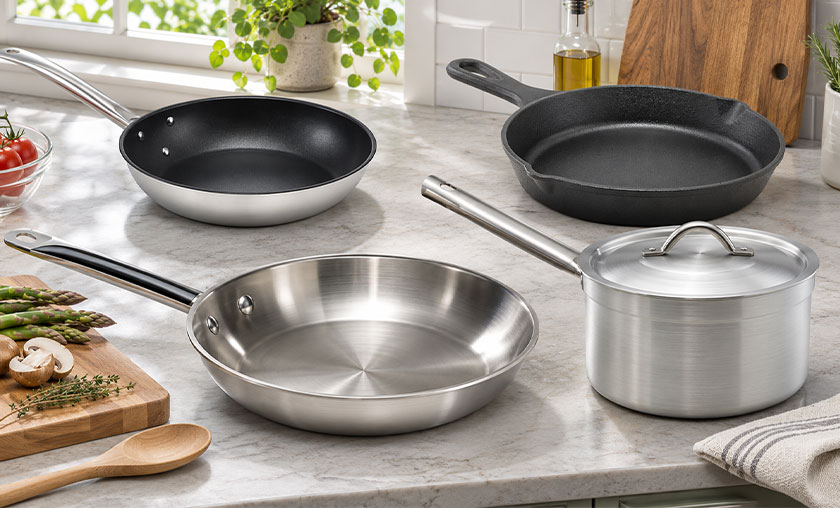

There is no single best cookware material for every Kenyan kitchen.
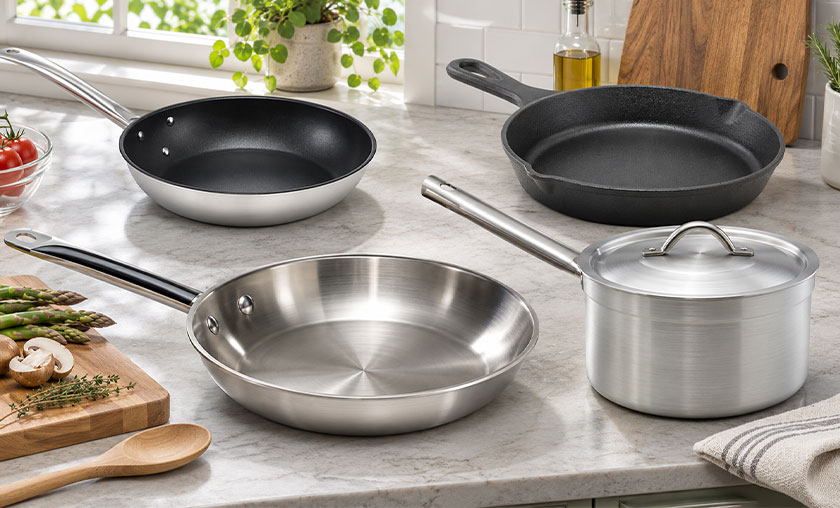
The pan that makes eggs easy is not necessarily the pan you want for searing meat. The sufuria that handles daily boiling and ugali well may not be the piece you choose for a delicate sauce. And the cookware that lasts longest may require more care, more weight or a higher initial spend.
For most homes, the best answer is not one matching set made from one material. It is a small mix of cookware chosen for the jobs you actually do.
| Material | Best for | Main strengths | Main trade-offs |
|---|---|---|---|
| Stainless steel | Stews, sauces, boiling, browning, everyday general use | Durable; non-reactive; handles high heat well; many pieces are dishwasher-safe; can last for years | Food can stick without good heat/fat technique; quality varies; induction depends on the base |
| Non-stick | Eggs, pancakes, fish, low-fat delicate cooking | Easy release; simple clean-up; useful at low-to-medium heat | Coating is a wear item; avoid metal utensils and excessive heat; not ideal for hard searing |
| Cast iron | Searing, frying, oven-to-table cooking, heat retention | Excellent heat retention; very durable; can develop a naturally slick seasoned surface | Heavy; slower to respond; needs drying and seasoning care; acidic cooking can affect seasoning |
| Aluminium | Ugali, boiling, everyday sufuria use, responsive cooking | Light; heats quickly; generally affordable; widely available | Uncoated aluminium can react with strongly acidic foods; thin pieces can warp or create hot spots; induction requires a compatible base |
Quick answer: For a typical home starting from scratch, a sensible mix is a good stainless-steel saucepan or casserole, one quality non-stick frying pan, and either a heavy-gauge aluminium sufuria or cast-iron piece depending on how you cook. Buy the pieces you will use rather than the largest matching set you can find.
1. Stainless steel: the best all-rounder for many kitchens
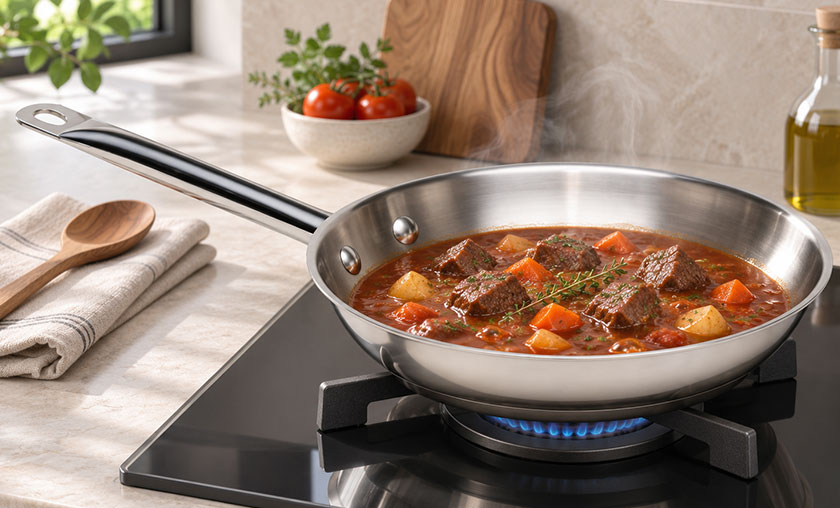
Good stainless-steel cookware is hard to beat for general-purpose cooking. It does not rely on a coating for its cooking surface, it tolerates browning and higher heat, and a well-made piece can stay in service for many years.
The important phrase is well-made. Stainless steel itself does not conduct heat as evenly as aluminium or copper, so good cookware often uses a conductive aluminium core or base to spread heat. A very thin stainless pan can still cook unevenly.
Stainless steel is especially useful for stews, beans, sauces, soups, boiling, braising and browning. It also works well when you want to build fond – the browned layer that develops on the pan and can be loosened into a sauce.
The main learning curve is sticking. Eggs and delicate fish are easier in non-stick. For meat and many vegetables, correct preheating, enough cooking fat and allowing food to release naturally can make stainless steel much easier to use.
Best for: households that want durable, versatile cookware and are comfortable learning a little technique.
2. Non-stick: useful, but treat it as a specialist rather than an entire kitchen
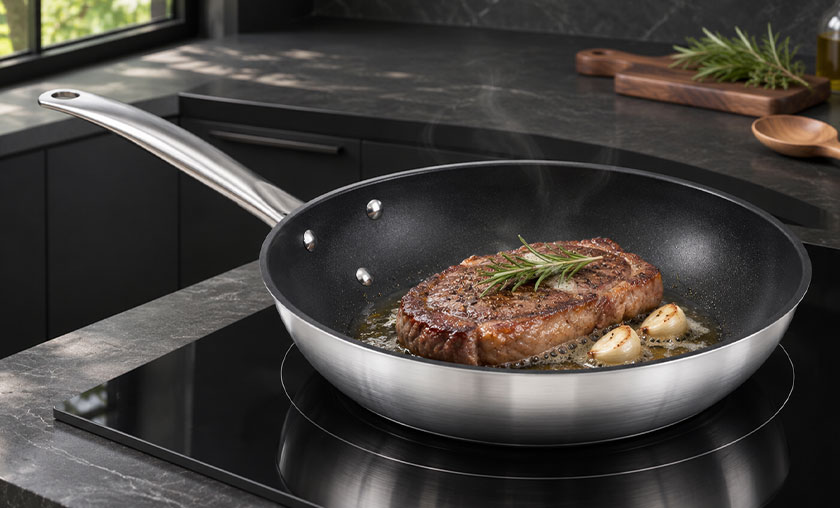
A good non-stick frying pan earns its place in most kitchens because it makes certain jobs much easier: eggs, pancakes, crepes, delicate fish and foods that benefit from lower-fat cooking.
The trade-off is longevity. A non-stick surface is a wear component, so it should not be treated like bare stainless steel or cast iron. Follow the manufacturer’s heat guidance, avoid overheating an empty pan, use utensils that will not damage the coating, and replace the pan when the cooking surface is materially worn or damaged.
For that reason, we would not build an entire kitchen around non-stick unless ease of use is the overriding priority. One or two carefully chosen pieces are usually enough.
Best for: eggs, pancakes, fish, quick breakfasts and cooks who prioritise easy release and clean-up.
3. Cast iron: excellent performance if you accept the weight and care
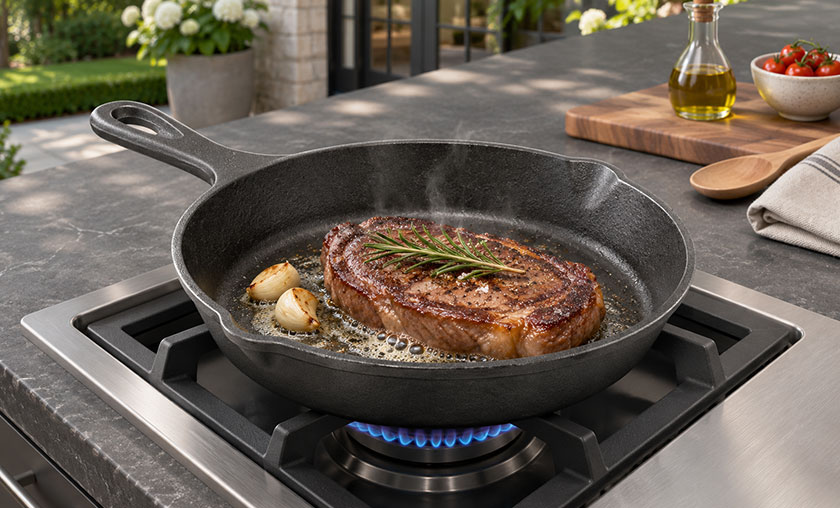
Cast iron is one of the strongest choices for heat retention. Once hot, it holds heat well, which is useful for searing meat, frying and cooking where temperature stability matters.
A well-seasoned cast-iron pan can also become increasingly easy to cook with over time. Unlike a synthetic non-stick coating, the seasoning can be renewed.
The compromises are obvious the moment you pick one up: cast iron is heavy. It also needs to be dried properly and maintained to prevent rust. Long, strongly acidic cooks can strip seasoning and sometimes affect flavour, particularly on a newer pan.
Best for: cooks who value durability, searing and heat retention and do not mind the additional weight and maintenance.
4. Aluminium: practical, responsive and especially relevant in Kenyan kitchens
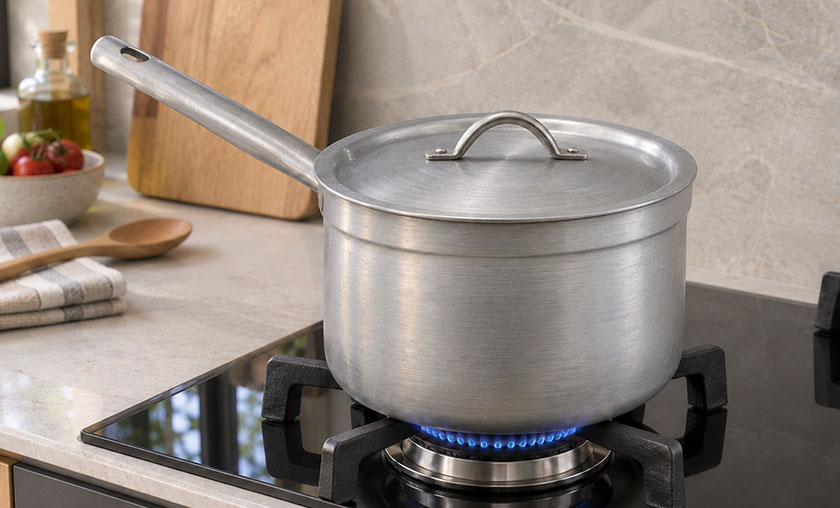
Aluminium deserves more respect than it sometimes receives in premium cookware conversations. It conducts heat quickly, is relatively light and has long been practical for everyday cooking in Kenyan homes.
For ugali and other heavy stirring tasks, many cooks appreciate a solid, stable sufuria that heats responsively without the weight of cast iron. But construction matters. Very thin aluminium can develop hot spots, dent or warp more easily.
Uncoated aluminium can react with strongly acidic or alkaline foods and may affect colour or flavour. Anodised aluminium, coated aluminium or clad cookware changes that behaviour, so the construction should be checked rather than treating all aluminium cookware as the same.
Best for: everyday boiling, ugali and households that value responsiveness, familiar handling and value.
Which material is best for common Kenyan cooking?
| Cooking job | Good starting choice | Why |
|---|---|---|
| Ugali | Heavy-gauge aluminium or suitable heavy stainless steel | Stable, practical pot with enough mass for vigorous stirring; choose comfortable weight and handles. |
| Beans and stews | Stainless steel / cast iron | Both suit longer cooks; stainless is lower-maintenance, cast iron retains heat extremely well. |
| Eggs and pancakes | Non-stick | Easy release and simpler clean-up. |
| Searing meat | Cast iron / stainless steel | Both tolerate higher-heat browning; cast iron retains heat, stainless is lighter and more responsive. |
| Tomato-rich sauces | Stainless steel | Non-reactive and straightforward for longer acidic cooking. |
| Everyday boiling | Stainless steel / aluminium | Both are practical; construction quality and handle comfort matter. |
What about gas, electric and induction?
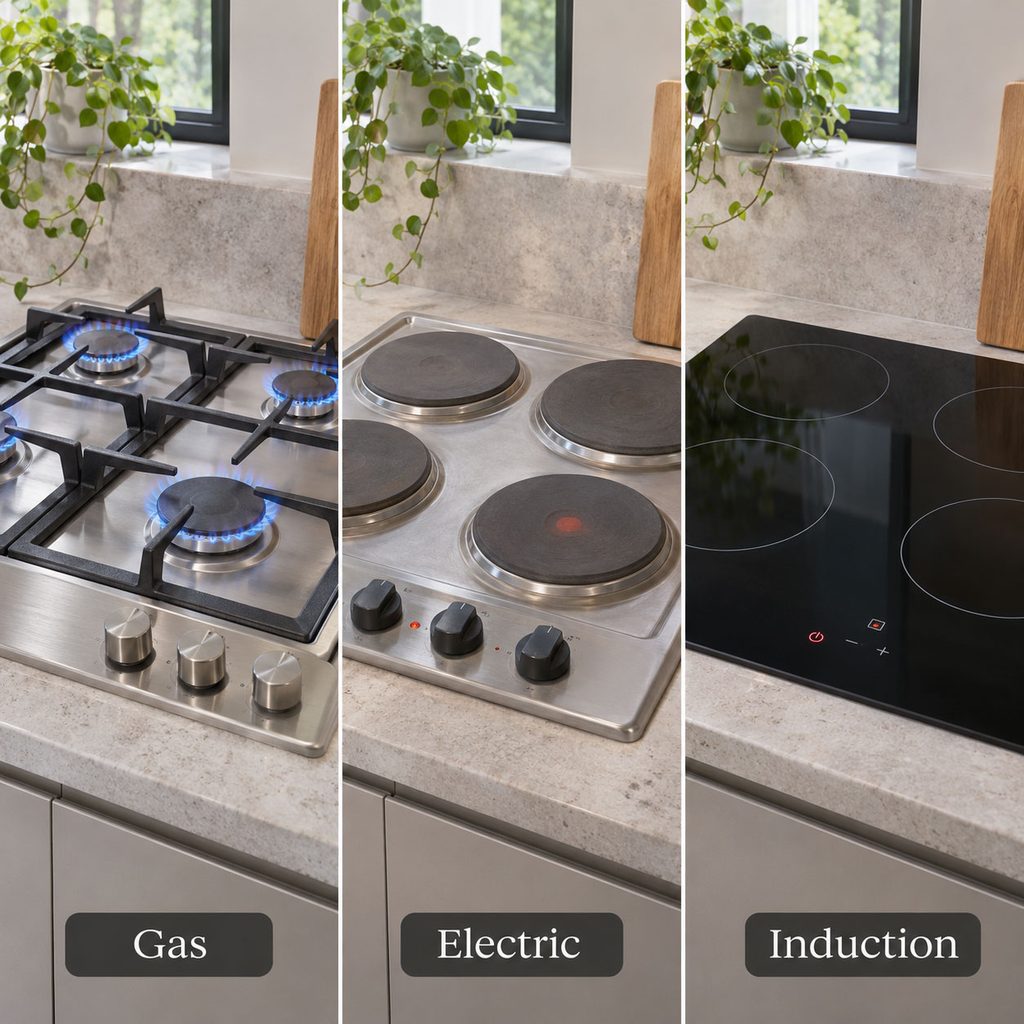
Gas works with most cookware materials, although very thin pans can heat unevenly over a concentrated flame.
Traditional electric solid plates and ceramic hobs also work with most flat-bottomed cookware.
Induction is different: the cookware needs a magnetic base. Some stainless-steel cookware is induction-compatible and some is not; ordinary aluminium is not magnetic unless it has a compatible bonded base. Cast iron generally works well on induction, but its weight means it should be handled carefully on glass surfaces. Always check the individual product specification.
Do you need a full matching cookware set?
Usually, no.
A large matching set can look attractive and may offer good value if you will genuinely use most of it. But for many households, buying three or four strong pieces across different materials produces a more useful kitchen.
A practical starter combination could be:
- One medium stainless-steel saucepan or casserole for sauces, stews and boiling.
- One quality non-stick frying pan for eggs, pancakes and delicate foods.
- One larger heavy-gauge sufuria in aluminium or stainless steel for everyday family cooking and ugali.
- Optional: one cast-iron skillet or casserole if you sear, fry or cook in the oven regularly.
Add pieces when your cooking habits prove you need them. Buying fewer, better-used pieces is often smarter than filling a cupboard with a set chosen mainly because the pieces match.
Where should you spend more?
Spend more where better construction changes performance or longevity. In stainless steel, an even, well-bonded conductive base or clad construction can matter. In non-stick, build quality, coating quality and handle design matter more than the number of pieces in the box. In aluminium, thickness and stability matter. In cast iron, even casting, comfortable handles and a usable cooking surface matter.
Also pay attention to the parts people forget: handle comfort, lid fit, weight when full, replacement availability and whether the cookware works on your current or future hob.
Our recommendation by type of cook
| If you are… | Start with… |
|---|---|
| Setting up a first kitchen | Stainless saucepan/casserole + non-stick frying pan + sturdy everyday sufuria |
| Cooking ugali several times a week | Prioritise a stable, comfortable heavy-gauge aluminium or suitable heavy stainless pot |
| Cooking lots of eggs / pancakes | Invest in one good non-stick frying pan rather than a full non-stick set |
| Serious about searing meat | Add cast iron or a quality stainless-steel frying pan |
| Wanting cookware to last for years | Prioritise stainless steel and/or cast iron; use non-stick selectively |
| Wanting the easiest maintenance | Stainless steel for most tasks plus one non-stick pan for delicate foods |
The bottom line
The best cookware for a Kenyan kitchen is usually a combination, not a single material.
Stainless steel is the strongest all-rounder. Non-stick is extremely useful for specific delicate foods. Cast iron rewards cooks who want heat retention and durability. Aluminium remains practical, responsive and particularly relevant for everyday Kenyan cooking when the construction is good.
Start with how you cook. Then choose the material. Brand comes after that.
How we reached this recommendation
This guide compares cookware materials on versatility, heat behaviour, durability, maintenance, weight, common Kenyan cooking uses, hob compatibility and long-term value. It is a category guide rather than a ranking of specific products. When we publish product-specific recommendations, prices, availability and model details should be checked at the time of publication.
Disclosure
Shopping.co.ke is published by Vitu Zote Supplies Ltd, which sells cookware and kitchen products. This guide is intended to explain cookware materials and is not limited to products sold by Vitu Zote. A product being available from Vitu Zote does not automatically make it a recommendation.
